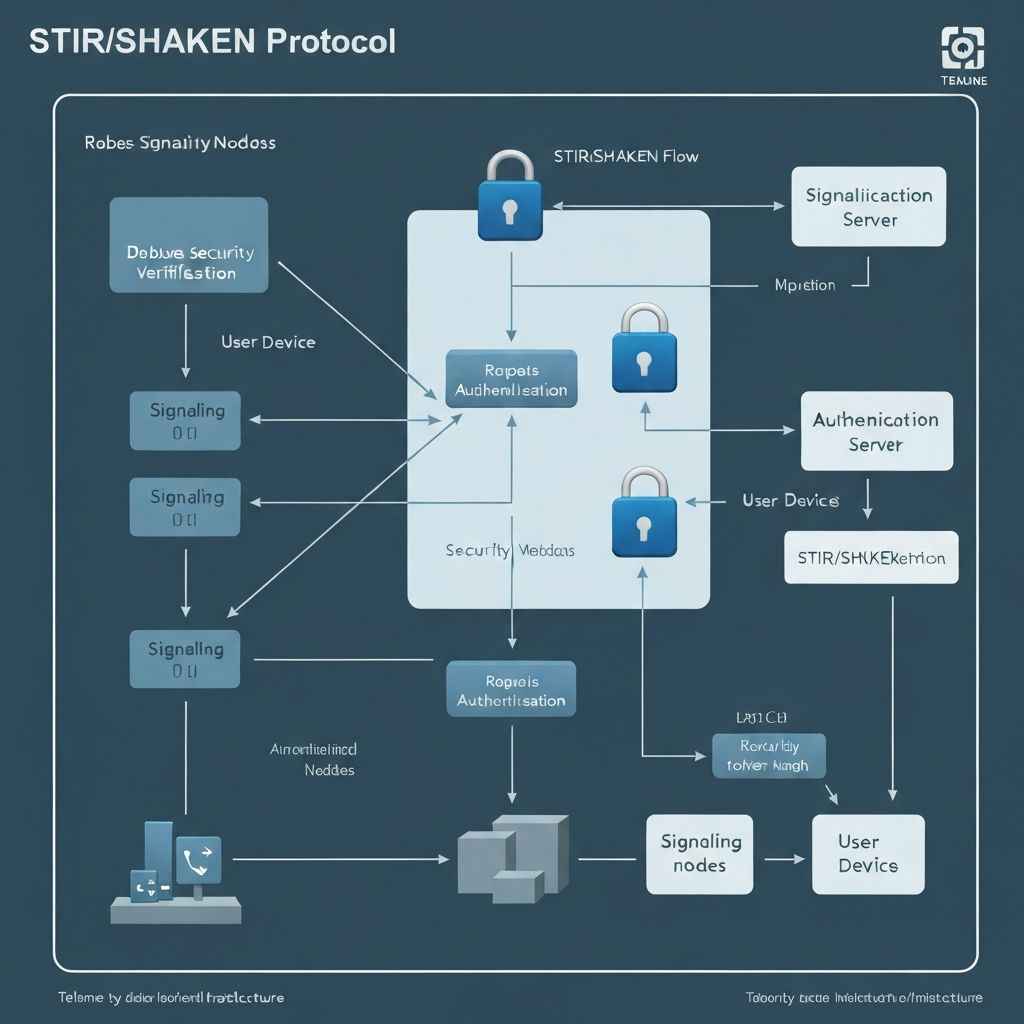
The telecommunications industry has undergone significant changes with the Federal Communications Commission's (FCC) implementation of STIR/SHAKEN protocols. This comprehensive guide will walk you through everything you need to know about implementing STIR/SHAKEN compliance in your telecom infrastructure.
What is STIR/SHAKEN?
STIR/SHAKEN stands for Secure Telephone Identity Revisited (STIR) and Signature-based Handling of Asserted information using toKENs (SHAKEN). These are protocols developed to prevent caller ID spoofing and robocalls by allowing carriers to verify the legitimacy of calling numbers.
FCC Requirements and Timeline
The FCC mandated that telecommunications carriers implement STIR/SHAKEN authentication by June 30, 2021. However, ongoing compliance requirements continue to evolve. Service providers must maintain and improve their robocall mitigation efforts through 2024 and beyond.
Implementation Steps
- Obtain a Service Provider Code (SPC) from the National Telecommunications and Information Administration (NTIA)
- Deploy SHAKEN authentication technology on your network
- Implement call authentication for all originating calls
- Deploy verification technology to validate incoming calls
- Establish robocall mitigation procedures and policies
- Maintain detailed compliance documentation
Attestation Levels Explained
STIR/SHAKEN provides three attestation levels: Full (A), Partial (B), and Gateway (C). Full attestation indicates the carrier has complete information about the caller and can verify the authenticity. Partial attestation means some information is missing, while Gateway attestation indicates the call originated from a foreign network.
Best Practices for Compliance
- Implement multi-level robocall detection and blocking
- Maintain accurate customer database records
- Deploy AI-powered threat detection systems
- Establish 24/7 monitoring and incident response protocols
- Regular staff training on compliance requirements
- Maintain comprehensive audit trails and documentation
Challenges and Solutions
Implementation can be complex, particularly for legacy systems. Common challenges include integrating new protocols with existing infrastructure, managing costs, and ensuring minimal service disruption. Working with experienced partners like Consumers Call can help navigate these challenges seamlessly.
Future Outlook
As we move through 2024 and beyond, STIR/SHAKEN compliance will become increasingly stringent. The industry is moving toward advanced analytics, AI-powered threat detection, and real-time verification systems to stay ahead of evolving robocall threats.